

Can a Restaurant Pass a Health Inspection Without a Certified Food Manager?

This is a question many restaurant owners and managers ask:
“Can my restaurant pass a health inspection if I don't have a certified food manager?”
The answer isn't always as simple as yes or no.
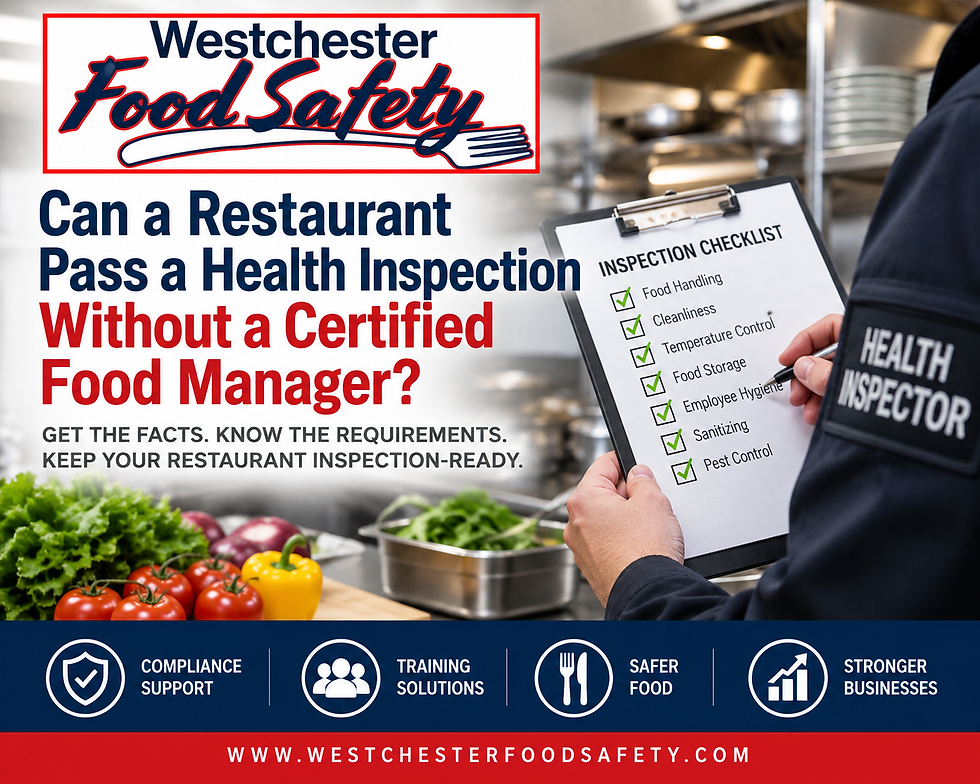
Food safety requirements can depend on the type of food establishment, the local health department, and the rules that apply to that particular operation. New York State has statewide food safety regulations, while local health departments may have additional requirements.
For restaurants in Westchester County, it's important to understand your specific requirements rather than assuming that every restaurant operates under exactly the same rules.
What Does a Certified Food Manager Do?
A Certified Food Protection Manager, sometimes called a Certified Food Manager, is a trained food safety professional who understands important food safety principles.
A certified manager can help oversee:
Proper food temperatures
Cooking and cooling procedures
Preventing cross-contamination
Employee hygiene
Cleaning and sanitizing
Food storage
Safe food handling
Employee food safety training
Having someone knowledgeable about food safety in a management position can make a major difference in a restaurant's daily operation.
Passing an Inspection Is About More Than Having a Certificate
A restaurant health inspection looks at the actual conditions and practices inside the establishment.
Inspectors can evaluate food handling, equipment, sanitation, employee practices, food storage, temperatures, and other conditions that affect public health.
New York State regulations require food service establishments to comply with Part 14 of the State Sanitary Code, and local health departments may have additional requirements.
Westchester County also requires food service establishments to comply with the State Sanitary Code, with the more stringent requirement applying when there is a conflict.
In other words:
A certificate alone doesn't make a restaurant safe.
Your employees still need to follow proper food safety procedures every day.
What If Nobody on Staff Is Certified?
This is where restaurant owners need to be careful.
Don't assume that because an inspector doesn't immediately ask to see a manager's certificate, certification isn't required for your establishment.
Requirements can vary based on the type of operation and applicable regulations.
The New York State Department of Health specifically notes that local health departments are responsible for permits and that local requirements may apply in addition to statewide regulations.
If you're unsure whether your restaurant is required to have a Certified Food Protection Manager, contact the health department that has jurisdiction over your establishment.
Why Having a Certified Manager Is Still a Smart Idea
Even when you're asking about inspection requirements, there is a bigger issue:
Who is responsible for making sure food safety procedures are followed every day?
A knowledgeable food safety manager can help create accountability in the kitchen.
They can teach employees what to do, identify potential problems, monitor procedures, and help correct mistakes before they become bigger problems.
Think of your certified manager as part of your restaurant's food safety team.
Don't Wait Until Inspection Day
One of the biggest mistakes a restaurant can make is treating food safety as something that matters only when an inspector arrives.
Instead, make food safety part of your everyday operation.
Managers should regularly check:
Food temperatures
Are refrigerators, freezers, hot-holding equipment, and food being maintained properly?
Handwashing
Are employees washing their hands at the appropriate times?
Cross-contamination
Are raw foods being kept separate from ready-to-eat foods?
Cleaning and sanitizing
Are food-contact surfaces properly cleaned and sanitized?
Food storage
Are foods properly protected, stored, labeled, and dated?
Employee practices
Are employees following your food safety procedures?
These daily checks can help prevent problems before an inspection.
What About New Employees?
Your certified manager should also help make sure new employees understand basic food safety practices.
Employees should know:
When to wash their hands
How to prevent cross-contamination
How to use gloves properly
How to check food temperatures
How to clean and sanitize
What to do when they are sick
How to properly store food
Who to ask when they have a food safety question
Training shouldn't stop after the employee's first day.
The Bottom Line
Can a restaurant pass a health inspection without a Certified Food Manager?
It depends on the specific requirements that apply to the establishment.
Don't rely on assumptions or what another restaurant is doing. Requirements can vary, and local health departments may have additional requirements.
For Westchester County restaurants, make sure you understand the requirements that apply to your specific food establishment and keep your staff properly trained.
And remember:
Being inspection-ready isn't about getting ready the day before the inspector arrives. It's about practicing food safety correctly every day.
Need Food Safety Training?
Westchester Food Safety provides ServSafe Food Protection Manager certification and food handler training for restaurants and food service operations throughout the tri-state area.
Whether you're looking to certify a manager, train new employees, or provide food safety training for your entire staff, proper education can help build a stronger food safety culture.
Westchester Food Safety
ServSafe Manager Certification
Food Handler Training
On-Site Restaurant Training
Serving New York, New Jersey, and Connecticut.
Learn more: www.westchesterfoodsafety.com
Train your staff. Protect your customers. Be ready every day.


Comments