

Food Safety for Restaurant Employees: What Every New Employee Should Know

Starting a new restaurant job can be exciting. You learn the menu, meet your coworkers, and get familiar with your new responsibilities.
But one of the most important things every restaurant employee needs to learn is food safety.
Whether you're a cook, server, dishwasher, food prep worker, manager, or cashier, your actions can affect the safety of the food served to customers.
Here are some basic food safety rules every new restaurant employee should know.
1. Wash Your Hands
Proper handwashing is one of the most important things you can do to prevent the spread of germs.
Wash your hands at the appropriate times, including before handling food and after activities that can contaminate your hands.
Don't rely on gloves to keep food safe. Gloves do not replace handwashing.
2. Stay Home When You're Sick
If you're sick, tell your manager.
Certain illnesses and symptoms can create a risk of spreading illness through food. Your restaurant should have procedures for reporting illness and determining whether an employee can work.
When you're not feeling well, don't hide it.
Food safety starts with being honest about illness.
3. Keep Raw Foods Away From Ready-to-Eat Foods
Raw meat, poultry, seafood, and eggs can contain harmful microorganisms.
Keep raw foods separated from foods that will be eaten without additional cooking.
Use the correct cutting boards, utensils, containers, and preparation areas, and follow your restaurant's procedures for preventing cross-contamination.
4. Learn How to Use a Food Thermometer
Never guess whether food is cooked or held at a safe temperature.
Use a properly functioning food thermometer and follow your restaurant's procedures and applicable food safety requirements.
Temperature control is one of the most important tools restaurants have for preventing foodborne illness.
5. Keep Food at the Proper Temperature
Food can become unsafe when it spends too much time in temperatures that allow harmful microorganisms to grow.
Learn your restaurant's procedures for:
Refrigerated food
Hot holding
Cooking
Cooling
Reheating
If you're unsure about a food's temperature, ask your manager.
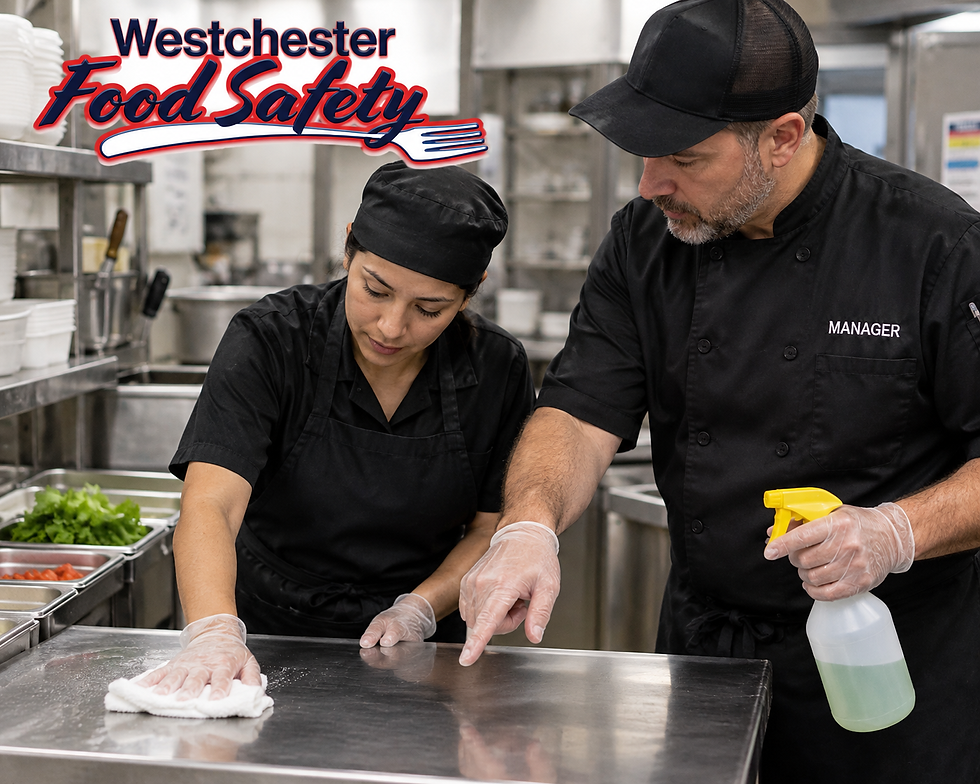
6. Clean and Sanitize
Clean and sanitized work areas help prevent contamination.
Employees should know the difference between cleaning and sanitizing.
Cleaning removes food, dirt, and grease. Sanitizing reduces microorganisms on surfaces to an appropriate level.
Follow your restaurant's procedures for cleaning and sanitizing equipment, utensils, counters, cutting boards, and other food-contact surfaces.
7. Use Gloves Correctly
Gloves can help protect ready-to-eat food, but only when they're used correctly.
Change gloves when they become contaminated, damaged, or when your task changes according to your restaurant's procedures.
Always follow proper handwashing practices before putting on new gloves when required.
8. Don't Touch Ready-to-Eat Food With Dirty Hands
Ready-to-eat foods may not receive another cooking step before being served.
Examples include:
Salads
Sandwiches
Garnishes
Bread
Cooked foods
Certain desserts
Follow your restaurant's procedures for handling these foods safely.
9. Keep Your Work Area Clean
A clean kitchen is an important part of food safety.
Clean up spills, food debris, and garbage promptly. Keep equipment and preparation areas clean and organized.
Don't allow dirty utensils or contaminated surfaces to come into contact with food.
10. Ask Questions
If you're a new employee, you aren't expected to know everything on your first day.
If you're unsure about something, ask your manager or supervisor.
It's much better to ask a question than to make a food safety mistake.
Food Safety Is Everyone's Responsibility
Food safety isn't just the manager's job.
Every person working in a restaurant has a role to play.
A dishwasher needs to properly clean and sanitize equipment.
A cook needs to control cooking temperatures.
A prep employee needs to prevent cross-contamination.
A server needs to handle food and utensils properly.
A manager needs to train employees and make sure food safety procedures are followed.
Everyone matters when it comes to food safety.
Start Your New Job With Good Food Safety Habits
Good food safety habits should start on your first day and continue every day you work.
Wash your hands.
Stay home when you're sick.
Prevent cross-contamination.
Control food temperatures.
Clean and sanitize.
Ask questions when you're unsure.
These simple habits can help protect your customers, your coworkers, and your restaurant.
Need Food Safety Training?
Westchester Food Safety provides ServSafe Food Protection Manager certification and food handler training for restaurants and food service operations.
We offer training for new employees, experienced staff, managers, and entire food service teams.
Westchester Food Safety
Serving the New York, New Jersey, and Connecticut tri-state area.
Learn more:
Train your staff. Protect your customers. Make food safety part of every shift.

Comments