

Who Should Take the Food Manager’s Exam? Understanding Who Needs to Be Certified

Food safety is not just the responsibility of the person cooking the food. In a restaurant, deli, cafeteria, catering operation, or other food establishment, someone needs to understand the rules, recognize hazards, and make sure employees are following safe food-handling practices.
That is where the Food Protection Manager certification exam comes in.
The purpose of a Food Manager’s exam is not simply to give someone a certificate to hang on the wall. It is designed to demonstrate that a manager or person in charge has a working knowledge of food safety principles needed to help protect customers from foodborne illness.
The FDA Food Code uses certification as one way for a person in charge to demonstrate food-safety knowledge, although specific requirements vary by state and local jurisdiction.
Who Should Take the Food Manager’s Exam?
The exam is particularly relevant for people who have management responsibility or are designated as the person in charge of a food establishment.

This can include:
Restaurant managers
Kitchen managers
Chefs and executive chefs
Sous chefs with supervisory responsibilities
Food service directors
Catering managers
Deli managers
Bakery managers
Cafeteria managers
Owners who are actively involved in food operations
Supervisors responsible for food safety
Other employees designated as the person in charge
ServSafe explains that its Food Protection Manager certification is intended to verify that a manager or person in charge has sufficient food-safety knowledge to help protect the public from foodborne illness.
Why Isn't Basic Food Handler Training Enough?
Food handler training and Food Manager certification serve different purposes.
A food handler needs to understand basic practices such as handwashing, preventing cross-contamination, personal hygiene, and safe food handling.
A manager has an additional responsibility: making sure those practices actually happen.
Managers may need to understand foodborne illness, allergens, employee illness policies, temperature control, cooking and cooling, cleaning and sanitizing, pest control, receiving and storage, and other food-safety controls.
The CDC reports that managers and workers who were food-safety certified were more likely to pass a food-safety knowledge test than those who were not certified.
Is the Exam Meant to "Weed Out" People?
In a sense, an exam does separate demonstrated knowledge from knowledge that has not yet been demonstrated.
But that doesn't mean the test is designed to determine whether someone is a "good" or "bad" restaurant employee.
Someone can have 20 years of restaurant experience and still have gaps in their food-safety knowledge. Conversely, someone relatively new to management can study, learn the material, pass the examination, and develop the knowledge necessary to take on food-safety responsibilities.
That distinction is important.
Experience matters—but experience alone doesn't automatically equal food-safety knowledge.
Certification provides an objective way to test that knowledge.
Certification Is About Responsibility
A manager's job goes beyond preparing food correctly.
The manager may be responsible for establishing procedures, monitoring employees, correcting unsafe practices, and making sure food-safety requirements are followed.
The FDA Food Code describes specific responsibilities for the person in charge, including monitoring employee handwashing and ensuring employees comply with food-safety requirements.
The CDC has also identified lack of managerial oversight as a common root cause associated with foodborne illness outbreaks.
That makes the role of a knowledgeable manager particularly important.
What Does the Research Say?
There is meaningful evidence connecting food-manager certification with food-safety outcomes.
A CDC analysis found that restaurants with certified kitchen managers were less likely to have foodborne illness outbreaks.
Another CDC study found that restaurants with certified kitchen managers were less likely to have critical violations in several inspection categories, including staff practices, food source and handling, ware washing, facilities and equipment, and hot holding.
These findings don't mean that certification alone guarantees a safe restaurant. Food safety depends on many factors, including employee training, management oversight, procedures, equipment, sanitation, and day-to-day execution.
But certification can provide an important foundation of knowledge for the person responsible for overseeing those systems.
Who Should Consider Taking It Even If It Isn't Required?
Even where certification isn't specifically required for every manager, it can be valuable for anyone who wants to take greater responsibility for food safety.
Restaurant owners may also benefit from having multiple trained and certified managers rather than relying on a single individual.
Consider certification if you:
Are moving into restaurant management
Are becoming a kitchen manager or chef
Own a food establishment
Are responsible for training employees
Want to better understand health-department requirements
Want to strengthen your restaurant's food-safety program
Are preparing to become the designated person in charge
The Exam Is a Responsibility—Not Just a Certificate
Passing a Food Manager certification exam should be viewed as more than checking a box.
The real objective is to take the knowledge learned through training and put it into practice every day.
A certificate cannot wash someone's hands, check a refrigerator, monitor cooking temperatures, prevent cross-contamination, or send a sick employee home.
People do that.
The value of certification comes when a knowledgeable manager uses that knowledge to create better habits, train employees, identify problems, and take corrective action.
Who Should Take the Food Manager's Exam?
If you're responsible for other employees, oversee food preparation, supervise a kitchen, manage a food establishment, or serve as the person in charge, the Food Manager certification exam may be an important part of your professional responsibilities.
And remember: local requirements vary. Always check with your state or local health department to determine who must be certified and what requirements apply to your establishment. ServSafe also advises checking local regulatory requirements.
Need Food Manager Training?
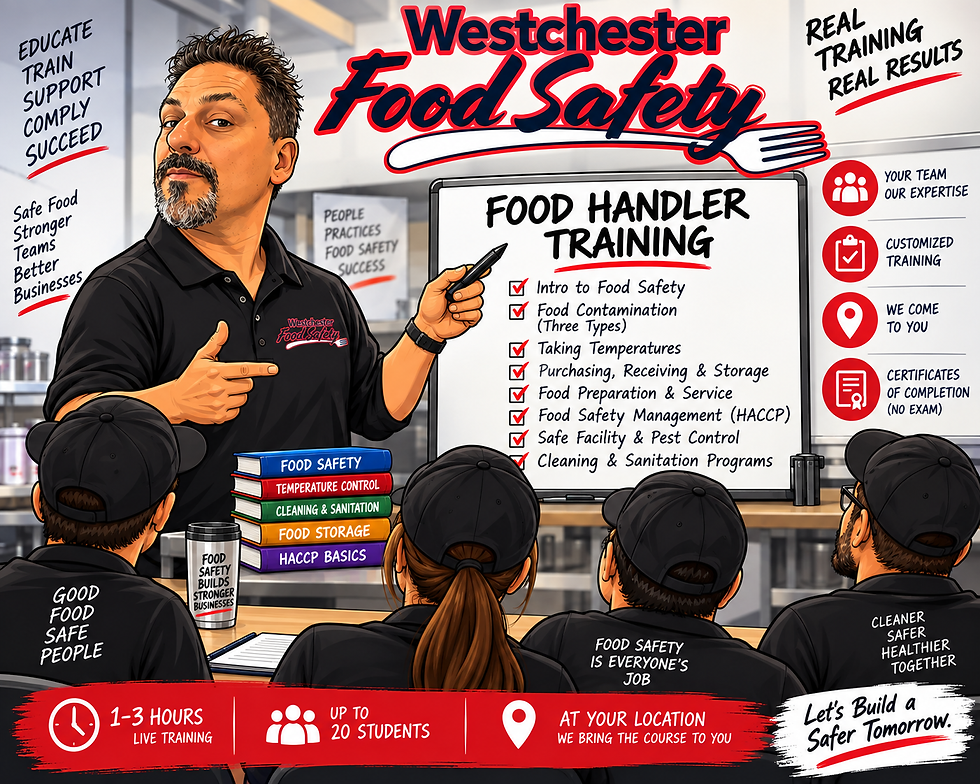
Westchester Food Safety provides ServSafe Food Protection Manager training and examination services for food-service professionals.
The goal isn't simply to pass a test. It's to understand food safety well enough to put it into practice when you're back in the kitchen.
Contact Westchester Food Safety today to learn how we can help your restaurant prepare for success.
Sources: CDC Restaurant Food Safety resources, FDA Food Code, and ServSafe/National Restaurant Association certification information.


Comments